

Growing up is challenging, especially for children in fast-moving communities where choices are limited, and emotions often feel too big for their small shoulders.
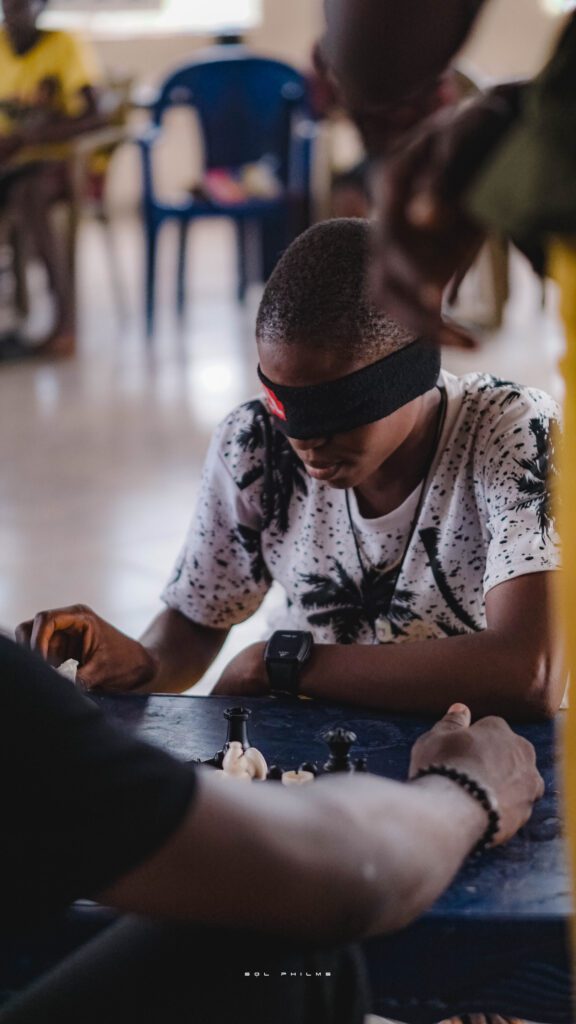
At Chess in Slums Africa (CISA), we’ve discovered a powerful way to help children navigate these challenges: chess. On a simple wooden board with sixty-four squares, children learn more than moves, they learn emotional control, patience, and resilience. Chess becomes a quiet classroom for the mind, helping children breathe, think, and grow stronger.
And this August, we’re creating an opportunity for even more children to experience these benefits firsthand through our Summer Chess Classes, a structured program designed to build these same life skills in a focused, immersive way. You’ll find full details about the program at the end of this article.
Why Chess is Key to Emotional Development in Children
Understanding and managing emotions is one of the most important skills a child can develop, and one of the strongest predictors of a child’s success academically, socially, and personally. For children facing instability or stress, emotional regulation acts as a shield.
It helps them:
- Pause instead of reacting in anger
- Think clearly instead of shutting down
- Navigate challenges with confidence
At CISA, we reinforce this with our C.A.S.T.L.E framework:
- Chess & Character Development
- S.T.E.A.M & Digital Skills
- Lifeline Education & Empowerment
Every puzzle, story, and session builds their emotional foundation brick by brick.
How Chess Builds Calmness, Patience, and Control
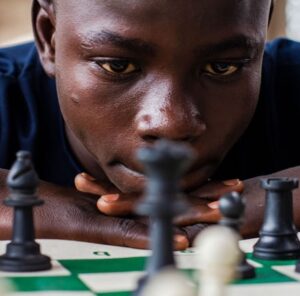
1. Chess Teaches Children to Pause and Think
Chess doesn’t reward rushing. At CISA, we make this fun and interactive through our call-and-response:
Coach: “Chess Players??”
Children respond: “Observe!!!”
This ritual reinforces the habit of pausing, observing, and planning before making a move. Our chess coaches also guide children with reflective questions:
“What options do you see? What happens if you wait?”
Through this practice, children learn to slow down, think carefully, and manage their emotions in both chess and real-life situations.
2. Using Chess to Teach Resilience Through Mistakes
Every mistake in chess, from losing a game or piece to missing a move, is a lesson. Children learn that mistakes are not failures, they’re opportunities to grow.
In our programs, mistakes are celebrated as teaching points. This shift from punishment to growth helps children build resilience, patience, and a healthy attitude toward failure.
3. Patience as a Superpower
Good chess players don’t rush their plans. They build slowly, think ahead, and trust their strategy. The children learn that not every result is instant; not victories, not mastery, not dreams. Through structured lessons and long-term mentorship, they realise patience is a superpower both on and off the board.
4. Staying Steady Under Pressure
There are moments in a game when the pressure rises and nerves kick in. Whether it’s a ticking clock or a tough position, staying calm is the real secret.
With every game, the children practise emotional control, breathing techniques, and strategic thinking skills that transfer naturally into stressful real-life situations.
5. Recognizing and Naming Emotions
From excitement after a clever move to disappointment after a loss, chess helps children notice what they are feeling. During debriefs, our mentors help children identify these emotions:
“How did that move make you feel? What did you notice about yourself?”
Naming emotions is the first step toward managing them, and the board becomes a safe space to practise that awareness.
How Chess Builds Emotional Skills for Children in Underserved Communities
Across slums, shelter homes, correctional centres, IDP camps, and public schools, CISA creates learning environments where children can grow emotionally as well as cognitively.
Our approach includes:
- Safe community centres where children feel seen and supported
- Trained mentors who model calm thinking and emotional discipline
- Chess-led character development sessions
- S.T.E.A.M workshops that build curiosity and confidence
- Lifeline and civic education that strengthen literacy, civic awareness, and self-belief
- Scholarships, health support, and vocational empowerment that stabilise their lives beyond the board
Chess is the entry point. Dignity, growth, and opportunity are the destination. Real Moves, Real Change
Stories of Emotional Growth Through Chess
From Obanliku: Strength Rising From Survivors



In the Obanliku community of Cross River, where the painful “money wife” tradition once trapped young girls, we launched the Queens Not Pawns Chess Project to support survivors and the daughters of survivors.
Using chess as a tool for healing, education, and empowerment, and with the full backing of traditional and community leaders, we selected 50+ girls from Obanliku to participate in an intensive two-week learning program. These girls were either born into or affected by the old practice, as well as children of survivors from families with low socio-economic backgrounds.
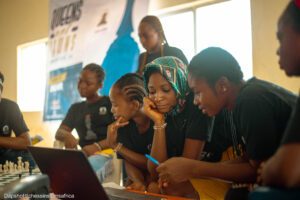 For six hours each day, the girls engaged in chess, coding, computer literacy, and drone technology, opening new worlds of imagination and skill. Every move on the chessboard became a lesson in strategy, patience, and confidence, reflecting challenges and opportunities in life itself.
Through every move, they rebuilt pieces of themselves, proving that while the past may be wounded, with opportunity, the future can always be rewritten.
READ MORE: International Day of the Girl Child 2025: Chess for Girls in Cross River
From Majidun: Mabel and the Path of Possibility


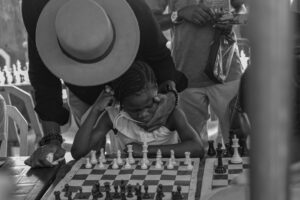

Mabel joined CISA in 2020 through our Majidun Chess Dream Project, initially drawn in by the snacks. What began as curiosity quickly grew into passion. She learned fast, competed boldly, and blossomed into a confident thinker with big dreams.

Today, Mabel aspires to become both an accountant and a chess Grandmaster. She was selected as an ambassador for the CISA Ubuntu Cultural Exchange Programme in the USA and had the honor of visiting the United Nations Headquarters in New York, sharing her story and inspiring others. She also played at the 2025 UN Games, which brought together chess players of all ages from different countries, giving her a chance to showcase her skills on an international stage, learn from global peers, and build lifelong connections.
Mabel, now benefiting from lifelong scholarship support from CISA, began as a child with limited access to formal education. Today, she stands as living proof that when a child touches the chessboard at CISA, they touch possibility.

These are just a few of the many stories of what chess can build in a child. Across diverse communities, especially in challenging environments, children have discovered confidence through the game;
Some who once reacted with anger now pause before responding. Some who once gave up now persevere through difficult positions. And some who doubted themselves now play boldly, trusting the strength of their mind. This is because chess becomes a mirror, showing them what they’re capable of.
How Adults Can Support Children’s Emotional Growth Through Chess

These small actions help the lessons from the board shape their everyday lives.
- Ask them how the game made them feel.
- Celebrate effort, focus, and calmness, not just their victories.
- Teach them to breathe, think, and restart whenever they feel overwhelmed.
- Use mistakes as opportunities to learn, not moments to scold.
These simple acts bring the lessons from the board into everyday life.
Conclusion: Chess as a Path to Emotional Strength
Chess may look quiet, but in the hands of a child, it becomes a voice, a reminder that they can guide their choices, control their emotions, and rewrite their future. Every match carries a powerful message:
you can guide your thoughts, your actions, and your emotions.
For children navigating difficult paths, this message can change everything. Emotional regulation helps them become stronger learners, kinder friends, and more confident dreamers.
At Chess in Slums Africa, we believe every child is like a pawn with the potential to rise. Through chess, mentorship, education, and opportunity, we help them take step after step toward the eighth rank, where new futures, new identities, and new possibilities await.
Turn These Lessons Into a Real Experience for Your Child This Summer
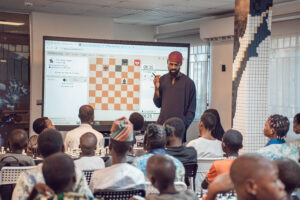
At Chess in Slums Africa, these emotional and life skills aren’t just ideas, they are practised daily through structured, immersive learning experiences.
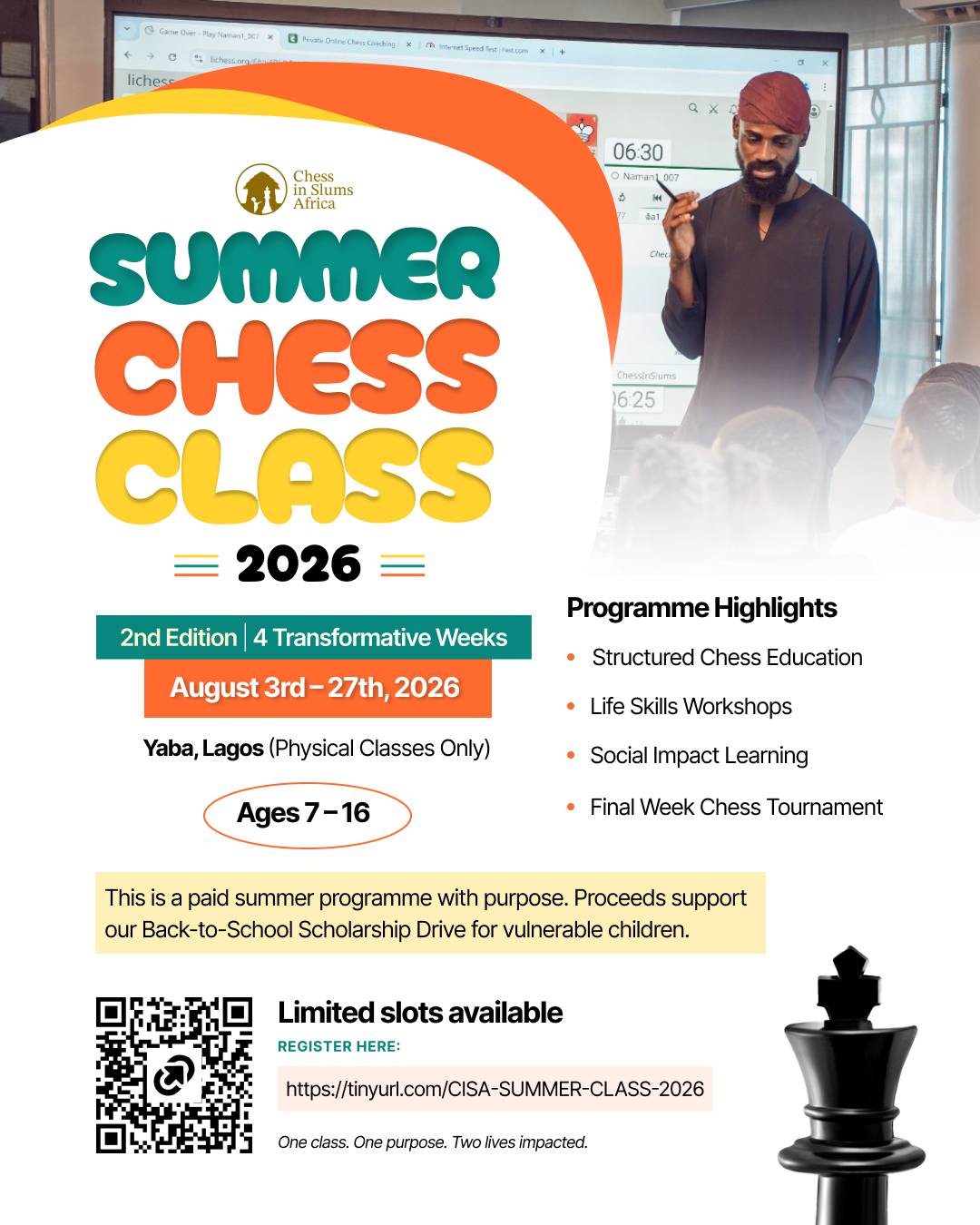
This August, we are bringing this same transformative approach to children through our 2nd Edition of the Summer Chess Classes, a 4-week intensive program designed to help children grow in confidence, focus, and emotional intelligence through chess.
- Program Dates: August 3rd – August 27th, 2026
- Schedule: Mondays to Thursdays
- Time: 10:00am – 1:00pm
- Age Group: 7–16 years
- Location: CISA Innovation Hub, Yaba, Lagos (Physical Classes Only)
What your child will gain:
- Expert-led chess training from CISA coaches
- Real-life application of chess thinking through life skills workshops
- Social impact introduction, your child learns how play can create change
- A final tournament experience with prizes and recognition
Program Fee: ₦200,000 (with flexible payment plans available)
Beyond learning, this program is a fundraising initiative supporting our Back-to-School Scholarship Drive, meaning your child’s participation also helps provide education opportunities for other children.
🔗 Explore our learning space: CHESS IN SLUMS AFRICA INNOVATION HUB
Limited slots available. Register here: https://tinyurl.com/CISA-SUMMER-CLASS-2026

📩 For inquiries: hello@chessinslumsafrica.com
Because every child deserves the freedom to dream, to learn, and to rise, and chess is a patient, wise companion along the way.

This article was inspired by Olutayo Atilolaoluwa Lydia, a counselling professional and mental health advocate with experience in adolescent psychology and child/youth development. As a volunteer with Chess in Slums Africa, she is deeply committed to promoting emotional well-being, resilience, and psychological growth among young people, with a strong passion for guiding adolescents through critical stages of development.