
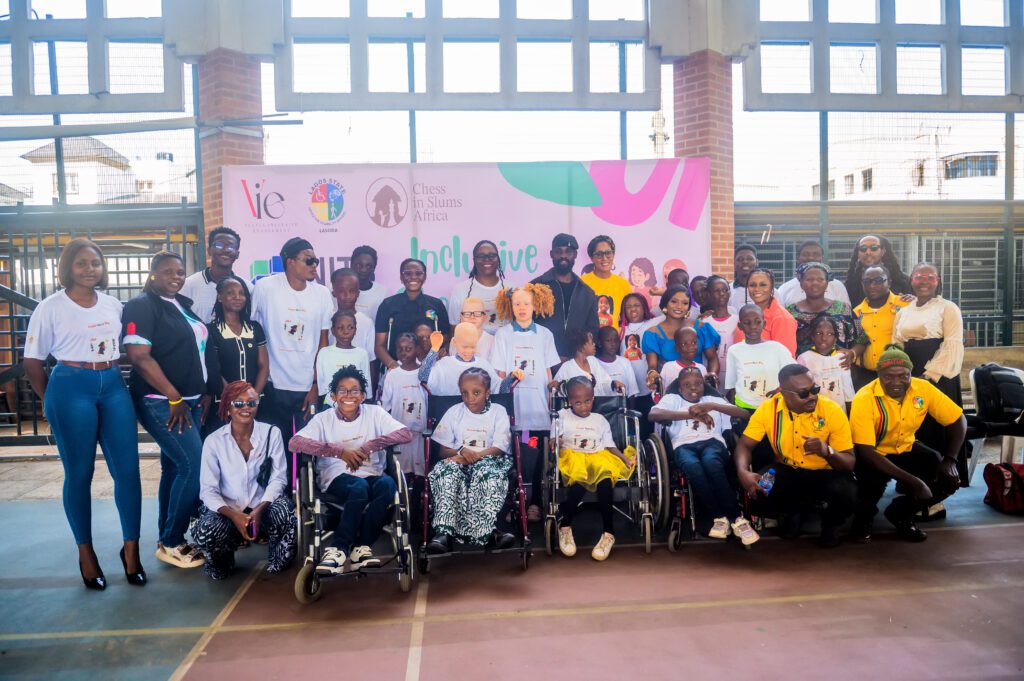
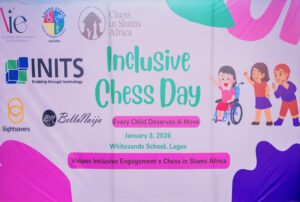
 On Saturday, January 4th, Chess in Slums Africa (CISA) collaborated with Vulpes Inclusive Engagement to provide chess training during the Inclusive Chess Day held at Whitesands School in Lekki. The event welcomed children aged 7 to 14 with autism, hearing impairments, and physical disabilities, giving each child the chance to experience the transformative power of chess.
Led by Onyinye Atuanya, Principal Consultant at Vulpes, and with the invaluable support of the Lagos State Office for Disability Affairs, under Mrs. Adenike Oyetunde-Lawal, General Manager, we helped create an environment where every child could participate, learn, and be challenged. We are deeply grateful to our partners for their commitment to making this event, and our broader mission, possible.
This event reflects our mission at CISA. Chess is more than a game. It can be a tool for inclusion, empowerment, and unlocking potential in every child.
Our Philosophy: How Chess Empowers Every Child
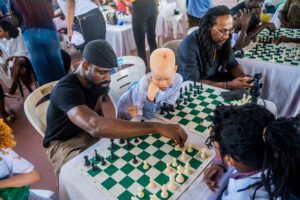
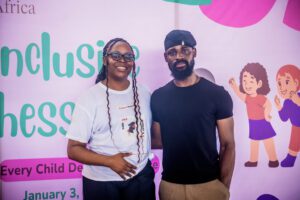 At CISA, we’ve built our entire approach on a simple truth articulated by our founder, Tunde Onakoya:
“Chess is a game of the mind, and anyone with an active mind can participate. Chess doesn’t discriminate. Chess is a universal language that transcends physical barriers. When you sit at a chessboard, what matters is your mind, your strategy, your ability to think, not whether you can walk or hear.”
In our programs, a child in a wheelchair has the same chances at becoming a grandmaster as anyone else.
Our Methodology: Teaching the Way They Learn
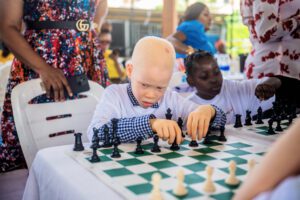
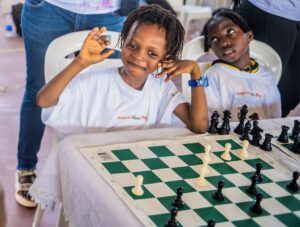
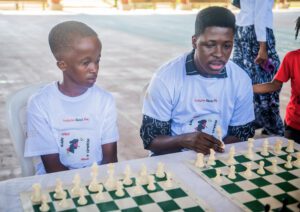

Our teaching methodology centers on one core principle that guides everything we do: “If a child isn’t learning the way you’re teaching, you need to teach them the way they can learn.” This is not just philosophy for us; it is embedded in our practice.
Onyinye Atuanya of Vulpes Inclusive Engagement captured the essence of this approach when she said:
“Inclusion is not about creating separate spaces; it’s about making existing spaces accessible to everyone.”
Chess Coach Peter Abidogun, Head of the Chess Education Unit at CISA, reinforced this perspective when he noted:
“Chess is a leveller because it accommodates everyone. The children may not be able to engage in physical activities, but on the chessboard, that does not matter. What it requires is focus and the use of the mind.”
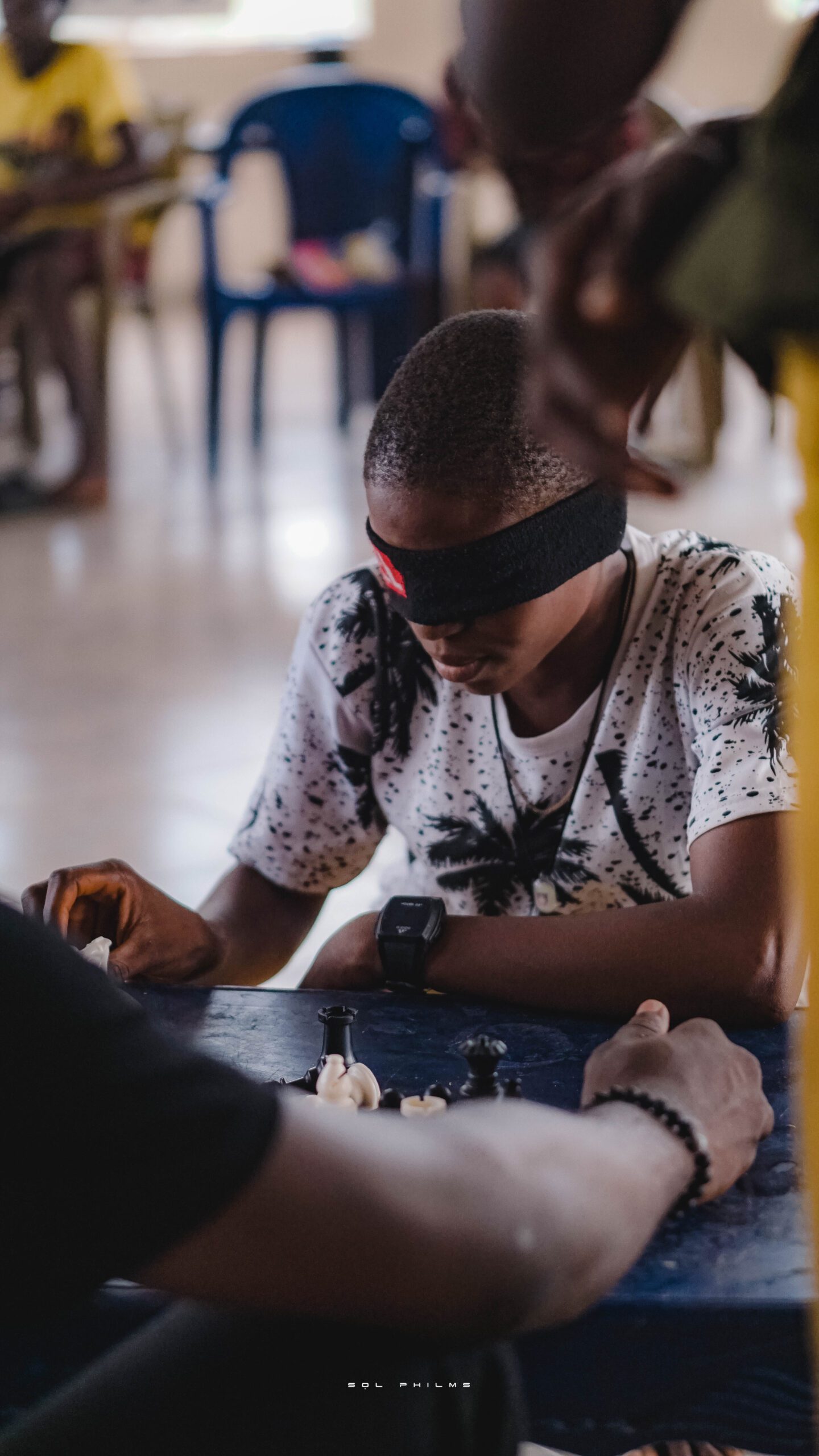
At the Inclusive Chess Day, sign language interpreters worked seamlessly with our chess instructors. We coordinated closely with caregivers to help children position chess pieces, and we adapted our teaching methods, materials, and approaches to meet each child exactly where they were. This is how we operate across all our programs, because we understand that accessibility is not optional; it is essential.
Ferdinand: A Story of Potential Unlocked Through Chess

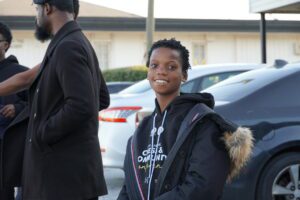
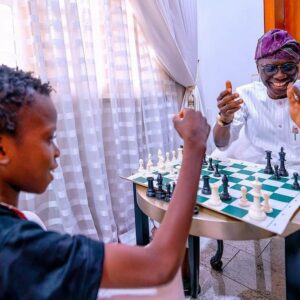

Ferdinand’s story remains one of our most inspiring, and his journey reflects exactly why we do this work.
When we first met Ferdinand, he was a 10-year-old boy from Makoko living with cerebral palsy. In his community, he had been dismissed and underestimated, with many failing to see his potential. At CISA, we saw something different. Through our chess programs, Ferdinand was introduced to the game, and over time, we witnessed a remarkable transformation.
Ferdinand did not just learn chess; he mastered it. With consistent training and guidance, he developed his skills and grew in confidence until he was ready to compete. He went on to win a tournament in the very community that had once written him off, marking a powerful turning point in his journey.
That victory earned Ferdinand a scholarship, and last year, we had the privilege of supporting his journey to New York. There, he won a gold medal at the ICN Championship NYC and received the Young Genius Award at the 12th Chess & Community Conference in Georgia. Ferdinand is living proof of what we see in every child we work with: limitless potential waiting to be unlocked.
What We Learned from the Inclusive Chess Day
The Inclusive Chess Day demonstrated three key truths:
- Physical disability does not equal intellectual disability
- Inclusion requires intentional design, not just good intentions
- Children do not need separate programs; they need accessible programs designed for them
As the children left Whitesands School, they carried more than chess knowledge. They carried proof that they belong, that they are valued, and that their potential is limitless.
Redesigning the Board: Every Child Deserves a Move

As those children left Whitesands School on January 4th, they carried more than chess knowledge. They carried proof that they belong in spaces where excellence matters. They carried the experience of being seen, valued, and challenged. They carried hope. We extend our gratitude to Vulpes Inclusive Engagement and the Lagos State Office for Disability Affairs for their partnership in making this event possible.
At Chess in Slums Africa, we believe every child deserves a move. Through our programs, our partnerships, and our unwavering commitment to inclusion, we’re redesigning the board, one child at a time.
The question isn’t whether these children have potential. We’ve proven they do. The question is: Are we ready to redesign the board?